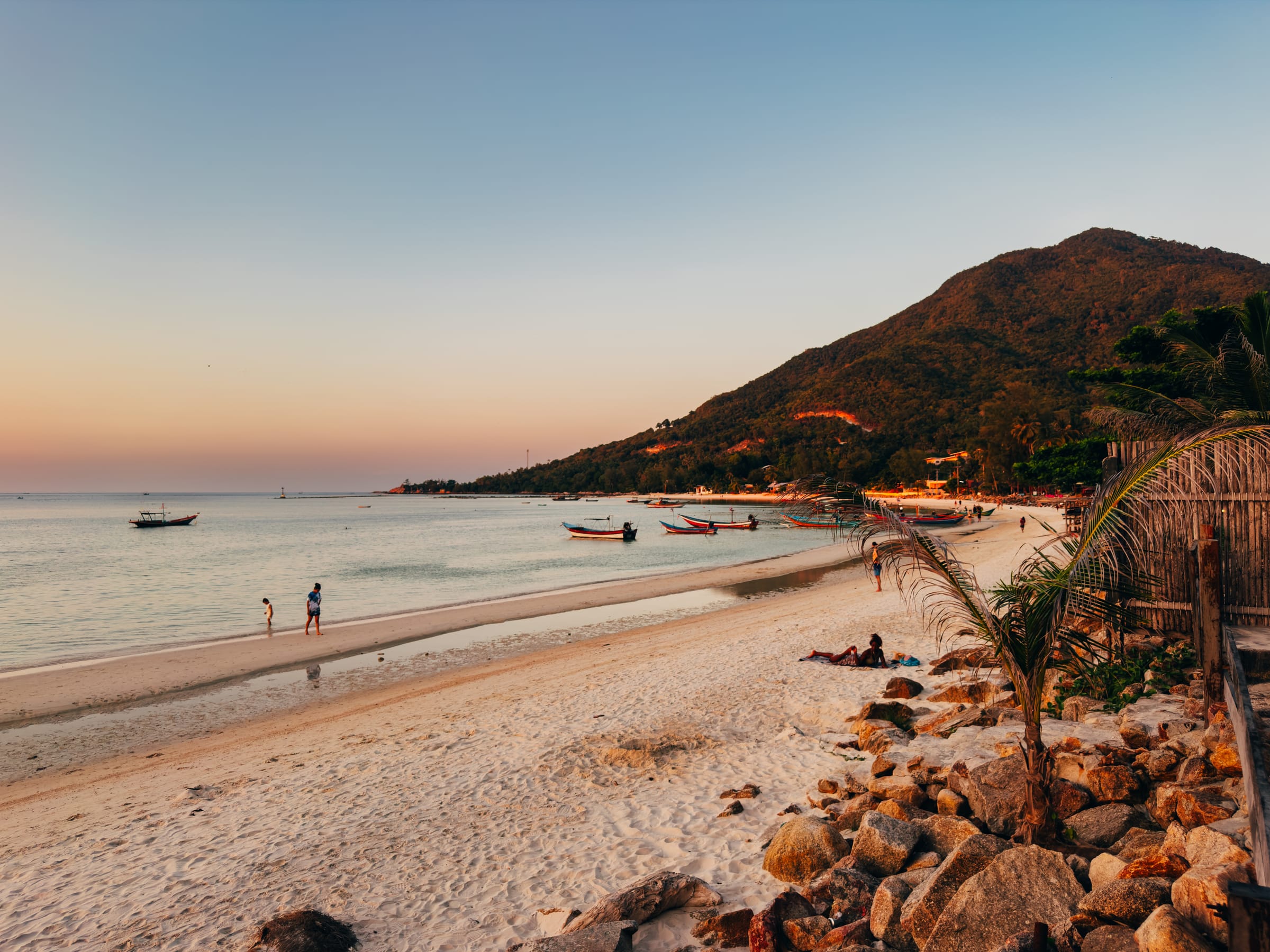
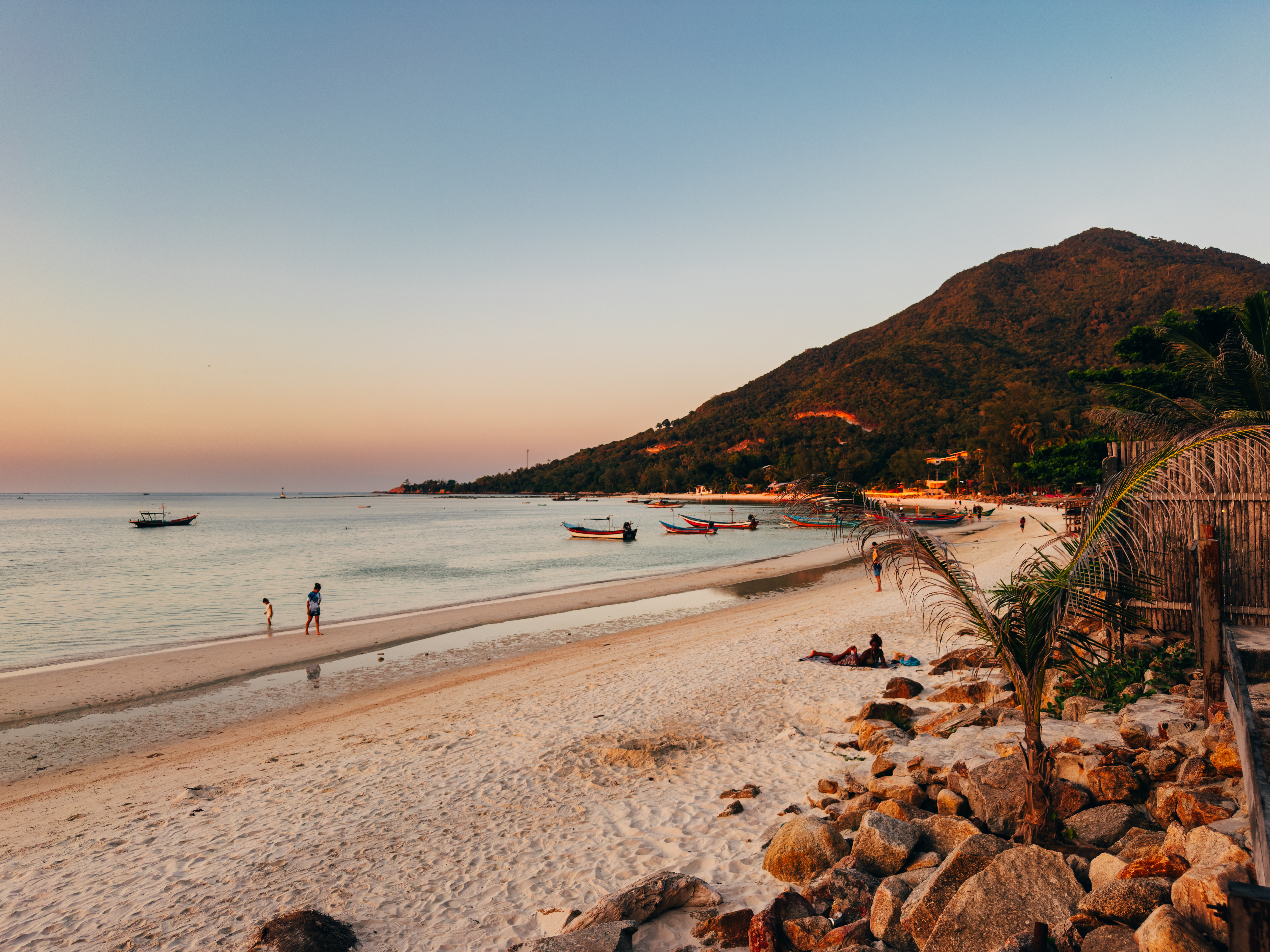
Koh Pha-Ngan sits in the Gulf of Thailand between its larger sister island Ko Samui to the south and the smaller Ko Tao to the north, rising steeply from the water to a single peak at 635 metres. The name comes from the word “ngan” in the southern Thai dialect, meaning sandbar, and throughout the shallow waters offshore the pale ridges are visible at low tide, half-submerged and shifting. Settlers are thought to have first arrived two or three hundred years ago to plant coconut trees.  For most of its modern history, it traded quietly on fishing and coconut farming until tourists began arriving in the 1980s, first from Bangkok, then from further afield. More than half the island is now designated as national park, with over 80 square kilometres of relatively unspoiled rainforest.  The interior is mostly inaccessible, the population confined to the coast. The island can receive nearly half a million visitors a year, and most of them are there for one of two things: the Full Moon Party at Haad Rin beach, or the diving.
We were there for the diving.
Sail Rock, known locally as Hin Bai, is widely considered the best dive site in the Gulf of Thailand.  It sits roughly halfway between Koh Pha-Ngan and Ko Tao, a huge grey slab of granite that rises approximately ten metres out of the turquoise water and drops, on the far side, to forty metres below the surface.
We left Chaloklum Bay at quarter to eight, the dive boat laden with people, kit, chicken and rice and isotonic drinks. Our guide that morning was Charlie, and from the outset he was managing expectations. We had just come from the Philippines, we told him, where the visibility had been exceptional. He nodded and said very little, which told us everything. The Gulf of Thailand is warmer and shallower than open ocean, conditions that conspire against clarity. He was not going to promise us something he couldn’t deliver.
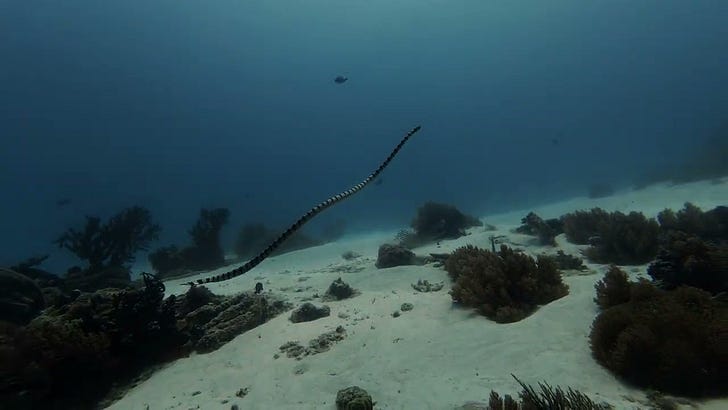
In the water, it was better than he’d led us to believe. Schools of batfish moved in slow formation around the rock’s upper face, their flat silver bodies catching what light filtered through. Barracuda circling. The reef opened into a coral garden where big grouper lurked in the shadows of the rock, motionless and watchful, as if they’d been there since the granite first broke the surface.
The highlight was the chimney. A hollow channel passes vertically through the eastern face of Sail Rock, entering at 18 metres and exiting at 8 metres.  You go in single file, ascending slowly through the dark interior of the rock, controlling your buoyancy to avoid disturbing the coral that lines the walls, watching the diver ahead of you as a silhouette against the pale glow of the exit. Below 18 metres, the visibility fell away to almost nothing.
After a few days of diving, we needed a break from the accumulated nitrogen and the post-dive fatigue that settles into you by the third afternoon. We decided to hike to Bottle Beach on the island’s north coast, which most people reach by water taxi. We had spotted there was a trail. We decided to give it a go.
We also decided that today was the day for a leisurely breakfast. By the time we set off it was midday, and the sun was already overhead and unforgiving.
Before we had even left the road, the heat was reflecting off the concrete underfoot and the air felt solid with it. By the time we reached the trailhead and the first proper tree cover, we were simply grateful for shade. What followed was steep, rocky, and poorly marked, a gravel track barely distinguishable in the dappled light, climbing hard through the trees. We stopped in patches of shadow to lower our heart rates. I had drunk half my 1.5 litres before the first thirty minutes were up. The sandals were a serious error of judgement. This terrain wanted proper trail shoes, not beach footwear, and it made that clear on every loose rock.
We crested what we were sure was the summit several times, and were wrong each time. When we finally reached it, the descent proved harder still, loose rock sliding underfoot, every step a small negotiation.
Red-faced and thirsty, we made it to Bottle Beach. It sits at the end of a narrow bay on the north coast, accessible by water or by the trail we had just climbed, and the remoteness is the point. A beachside café produced cold smoothies. We attempted the sea, but the water was too warm to do anything more than deepen the heat already in our bodies.
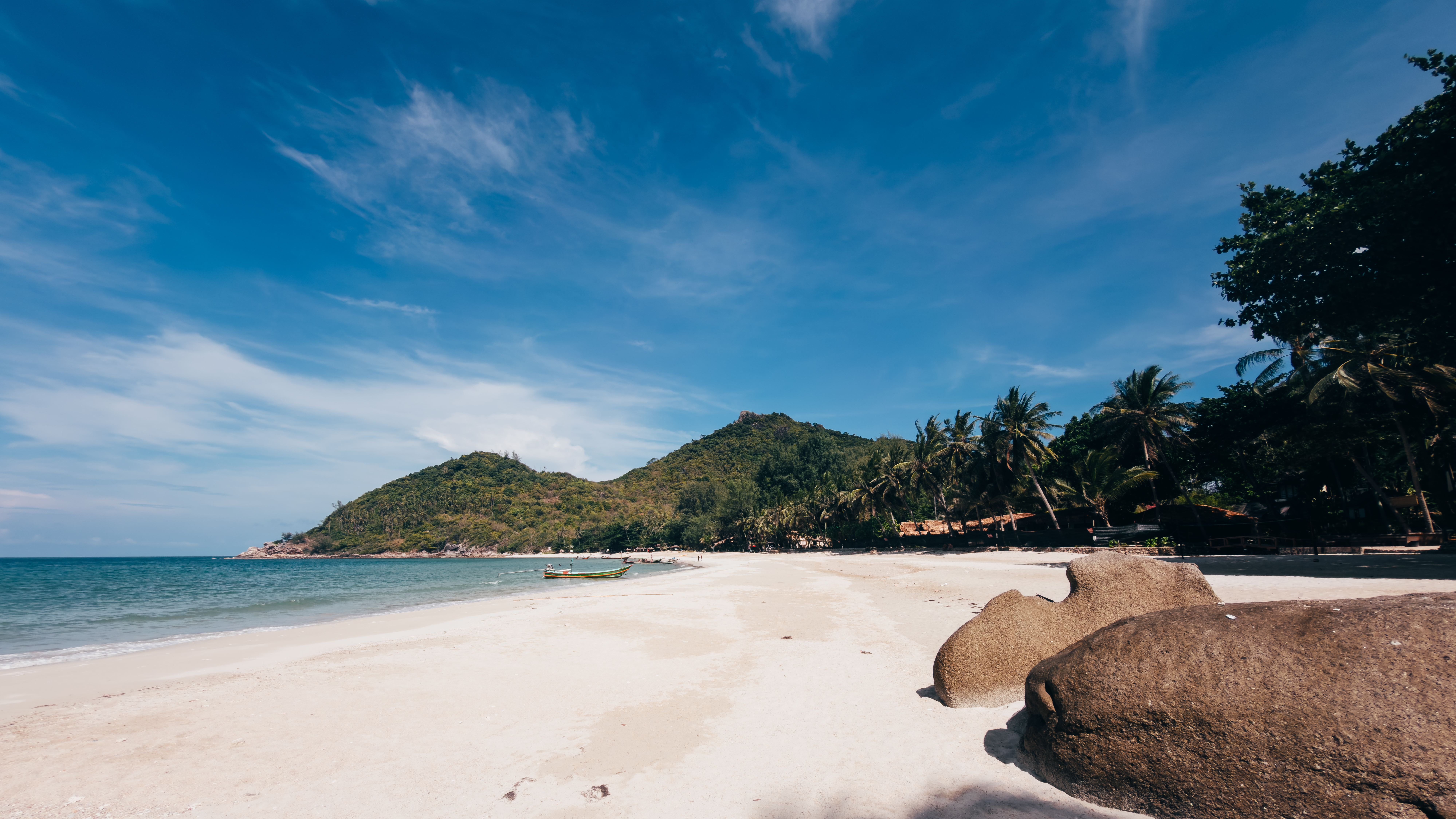
After a couple of hours, we caught a water taxi back to Chaloklum Bay, a boat operated by a man who demonstrated his command of his craft by showing us precisely how close he could get to rocks, snorkelers and other obstacles without incident. He seemed to find this amusing, like a party trick he practises regularly.
We were sad to leave Koh Pha-Ngan. It was quiet, the food was excellent, the diving fun and the people generous.
We landed in Bangkok through a thunderstorm, with a literal bang.
Bangkok traces its roots to a small trading post during the Ayutthaya era in the 15th century, growing to become the capital under King Rama I in 1782.  It remained the centre of Siam’s modernisation through the late 19th century, was occupied by Japan and bombed by the Allies in the Second World War, and has served ever since as the country’s primary political stage. In 2014, democracy was effectively replaced by military rule when General Prayut Chan-ocha seized power, and restrictions on political speech and assembly have tightened considerably since.  The city now has an estimated population of 11.4 million, with the wider metropolitan region home to around 17 million, a quarter of Thailand’s entire population.
We arrived late, checked in, and stepped out briefly for a drink and something to eat. On the short walk from the hotel, the city announced itself immediately, tuk-tuk drivers, bar owners, and women in doorways swinging their hair like a shampoo advertisement and reaching out their hands to catch your eye. Laminated menus of exotic entertainment were pressed into our faces, their contents intimate and unambiguous. Bangkok’s Thai name is Krung Thep, city of angels. We ate, and went to bed.
We had not expected Lumpini Park, a long rectangle of green in the middle of all that concrete and glass, laid out in the early 20th century by King Rama VI and still used daily by runners, cyclists, and anyone who needs a few square metres of quiet. The park was busy with water monitor lizards, moving unhurriedly through the undergrowth and along the banks of the lake, indifferent to the joggers passing within a metre of them. We had seen their cousins in the wild in Borneo, in very different circumstances. Here they have simply worked out that the city is more convenient, it has done the hard work for them.
Tomorrow: 12.5 hours to London, then the transfer home.