Kota Kinabalu was our stopover. A couple of nights to shake the flu, reenergise, eat well. By the time the connecting flight to Sandakan came around, I was functional, if not entirely recovered.
From Sandakan, the first stop was Sepilok, a small settlement forty minutes outside the city where two sanctuaries sit almost side by side, connected by a boardwalk through the reserve.
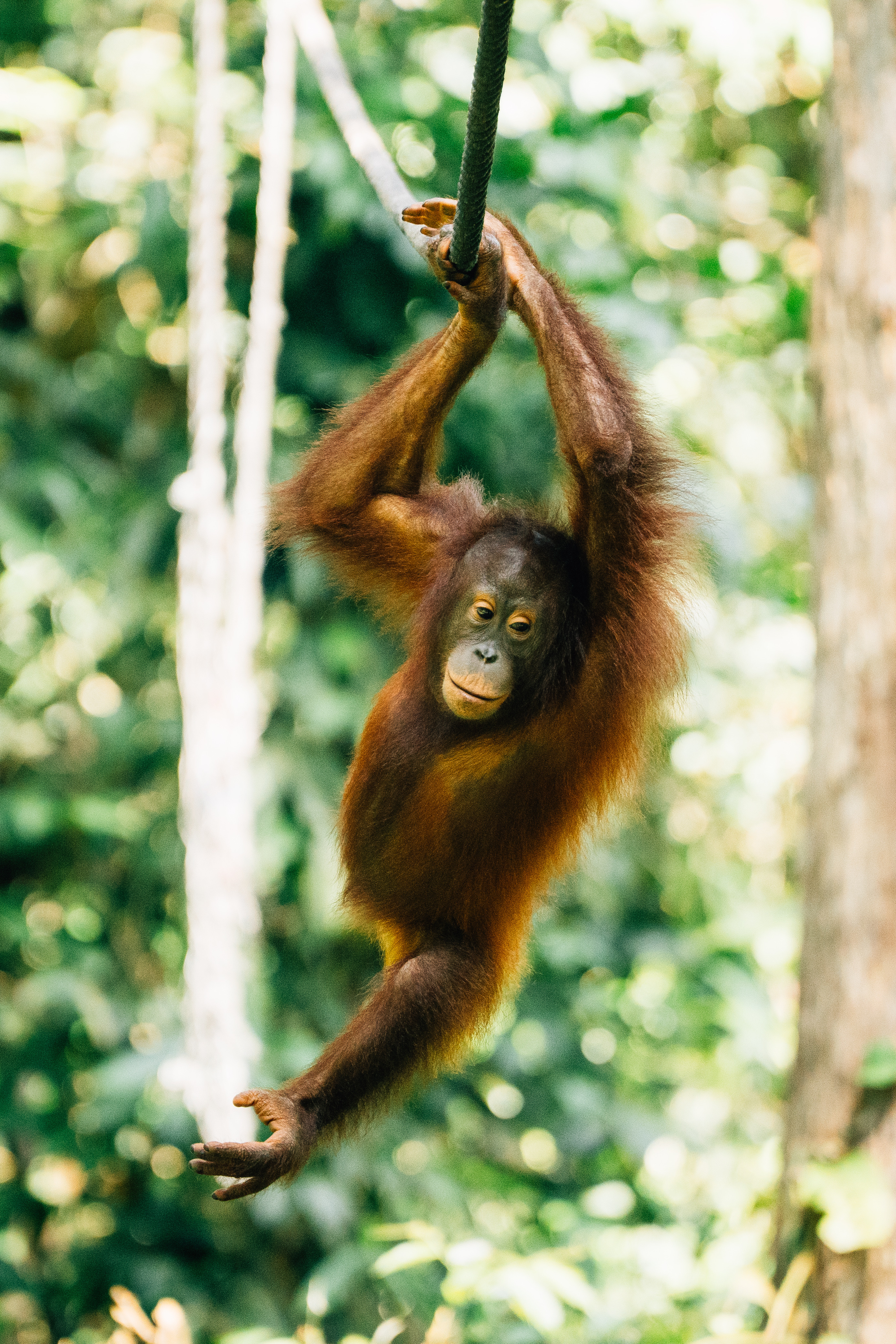
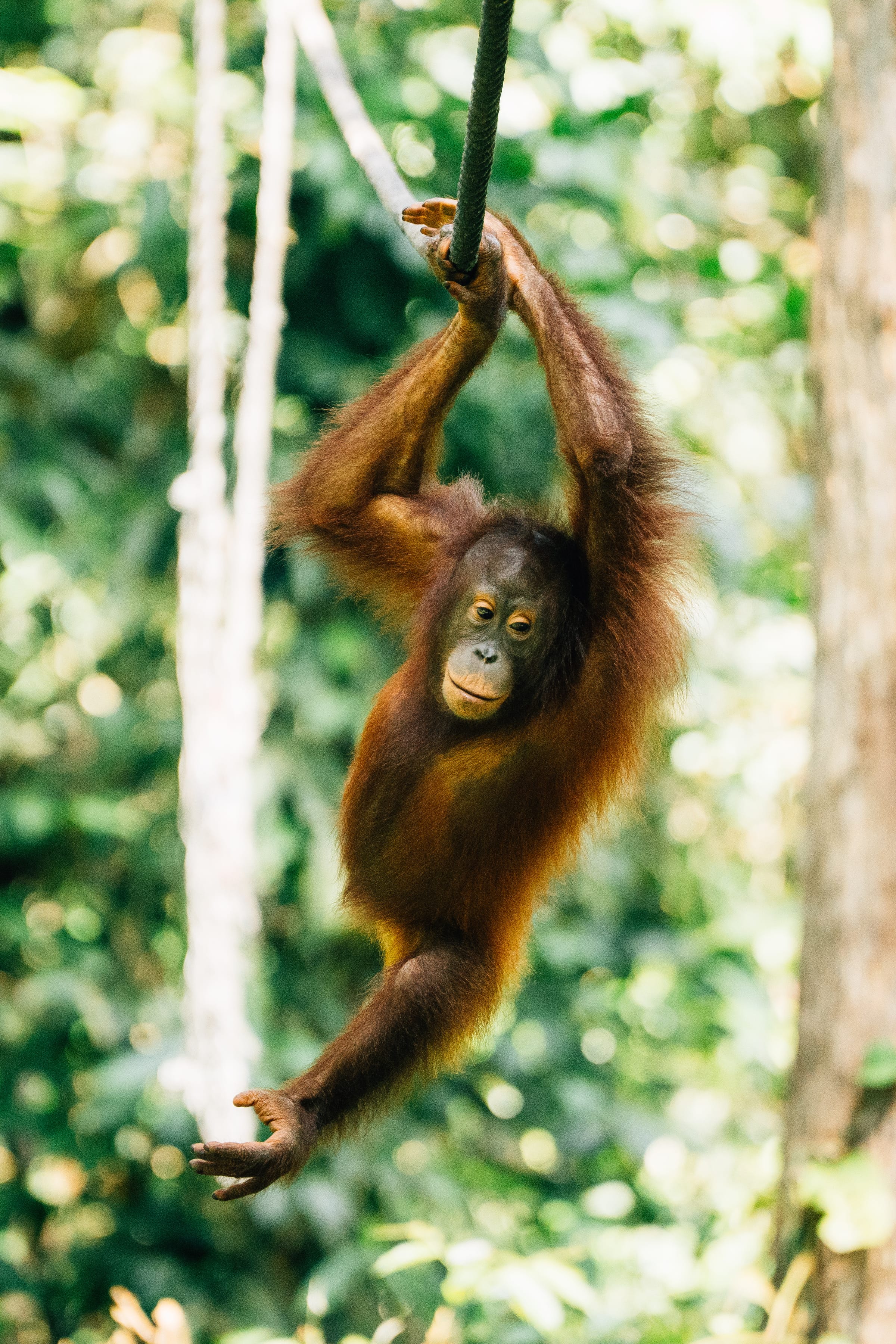
The Sepilok Orangutan Rehabilitation Centre was established in 1964, the first in the world dedicated to the rehabilitation of orangutans. Its mission has remained the same: to take in orphaned, injured and displaced animals and return them to the wild when they’re ready.  Today, around 60 to 80 orangutans live independently in the rainforest reserve, while roughly 25 orphaned animals are housed in the nurseries. Supplementary food is kept deliberately monotonous, the point is to push them toward foraging for themselves. 
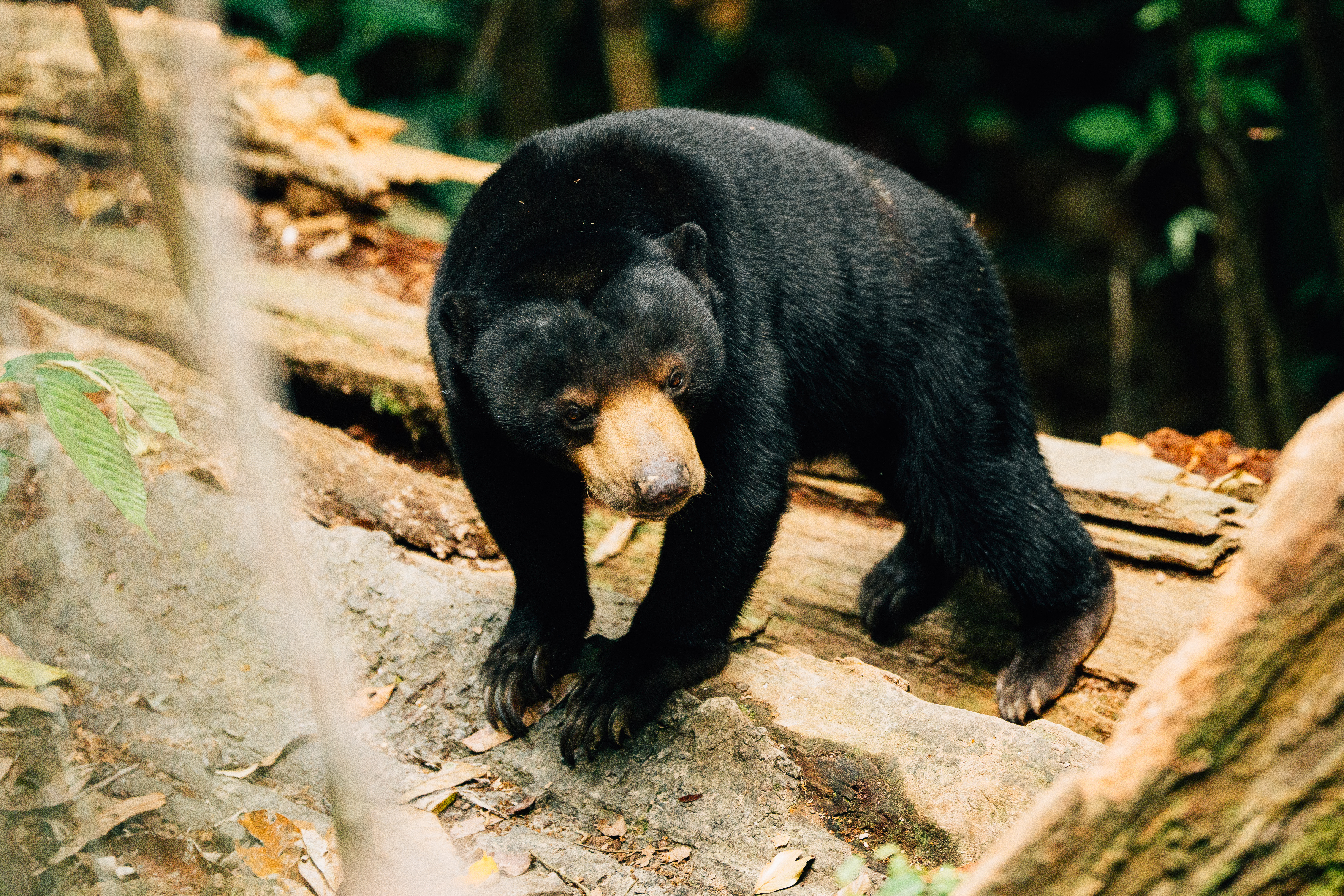
Next door, the Bornean Sun Bear Conservation Centre was established in 2008 by wildlife biologist Wong Siew Te, following a nationwide survey that found many sun bears being kept in poor and unsuitable conditions.  It is the only sun bear conservation centre in the world.  The sun bear is the smallest bear on earth, found only in Southeast Asia. It is also among the least well known.
Both places were busy. Coaches in the car park, queues at the ticket desks, tour groups moving in clusters through the reserve. Conservation costs money, and tourism is a significant part of how these operations stay open.
In the cafes and gift shops at and around the sites, branded signage and sponsored displays of several of the world’s largest FMCG companies were prominently visible. The same corporations whose demand for cheap palm oil has been a direct engine of deforestation in Borneo, here at the sanctuaries. You couldn’t miss it. What they couldn’t miss was an opportunity to profit from the conservation of wildlife, alongside their destruction of it.
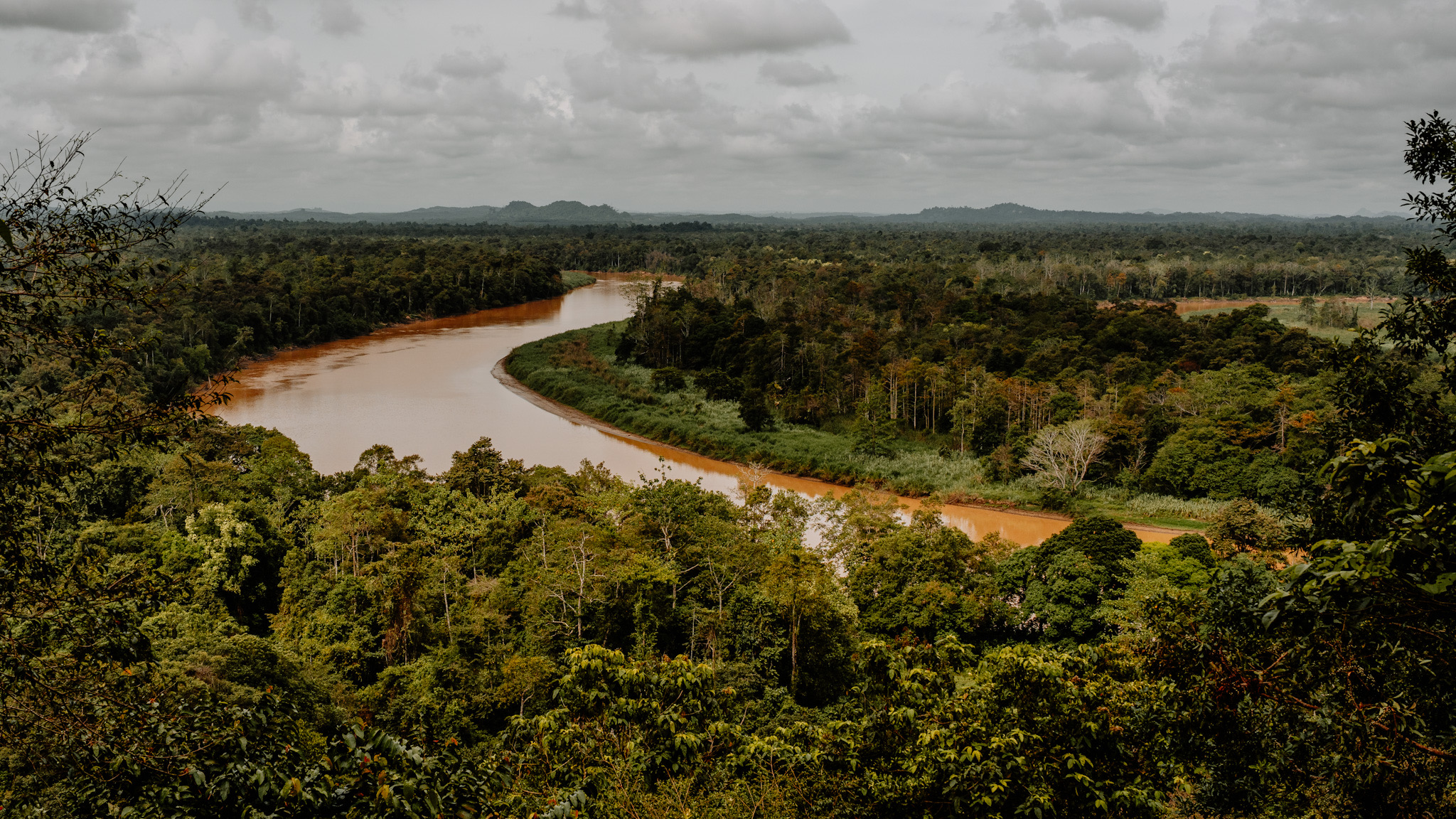
The Kinabatangan is the longest river in Sabah. It runs brown and opaque, the colour of strong tea, good camouflage for the saltwater crocodiles that patrol its banks. Some spotted on this stretch are said to approach seven metres. The ones we saw were considerably smaller.
We’d come from Sri Lanka, where wildlife in the national parks has a certain density to it, a readiness to be seen. The Kinabatangan felt different. Quieter. Harder. Our guide seemed quiet too, aloof in a way I couldn’t quite read. Coy, or disinterested, or perhaps just someone who had watched the numbers dwindle here for long enough that small talk about it no longer came easily.
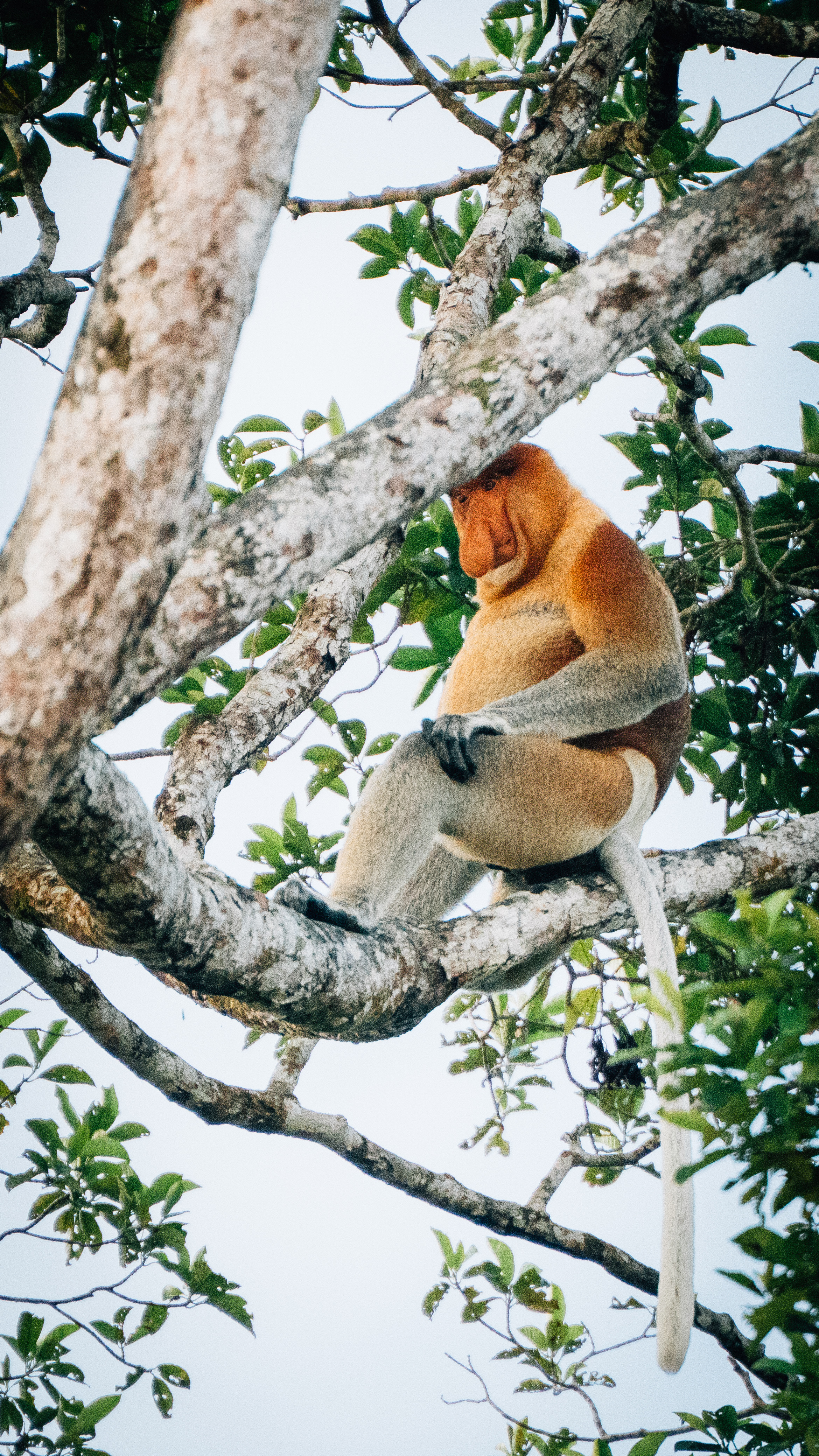
The proboscis monkey is found nowhere else on earth but Borneo. Numbers have fallen by more than 50% over the past forty years as the widespread depletion of forests continues.  In the evenings they gathered in the trees along the bank, their extraordinary noses pendulous, fleshy, and undeniably hilarious, catching the last of the light.
Between 2000 and 2018, roughly 39% of Bornean tropical forests were converted into palm oil plantations. With 8.2 million hectares of production, Borneo generates more palm oil than anywhere else on earth.  Flying in, I’d seen the scale of it from the air and found that my brain simply couldn’t compute it. On the river, the plantations came right up to the bank, fences pushing to the waterline, the oil palms looming above. You could see, from the boat, exactly where the forest ended.
This is what people mean when they call the Kinabatangan a mosaic rainforest. There are patches left, fragments, corridors, but not a critical mass. The roads in are surfaced and wide enough for HGVs. This is not incidental. Chocolate. Toothpaste. Peanut Butter. Our insatiable demand for Palm Oil demands efficient infrastructure here. The supply chain runs all the way to the river bank.
In the 1980s and 1990s, the forests of Borneo were levelled at a rate unprecedented in human history; burned, logged and cleared, commonly replaced with agriculture. Since 2020, 92% of deforested land has been converted into a plantation in under a year.  A monoculture on this scale doesn’t support wildlife. It is, ecologically, closer to a car park than a forest.
The plastic was another surprise. I’ve travelled in places where litter is a problem, but I’ve never seen anything quite like what decorates the Kinabatangan. Mid-river, along the banks, caught in the roots of the vegetation. A continuous tide of it.
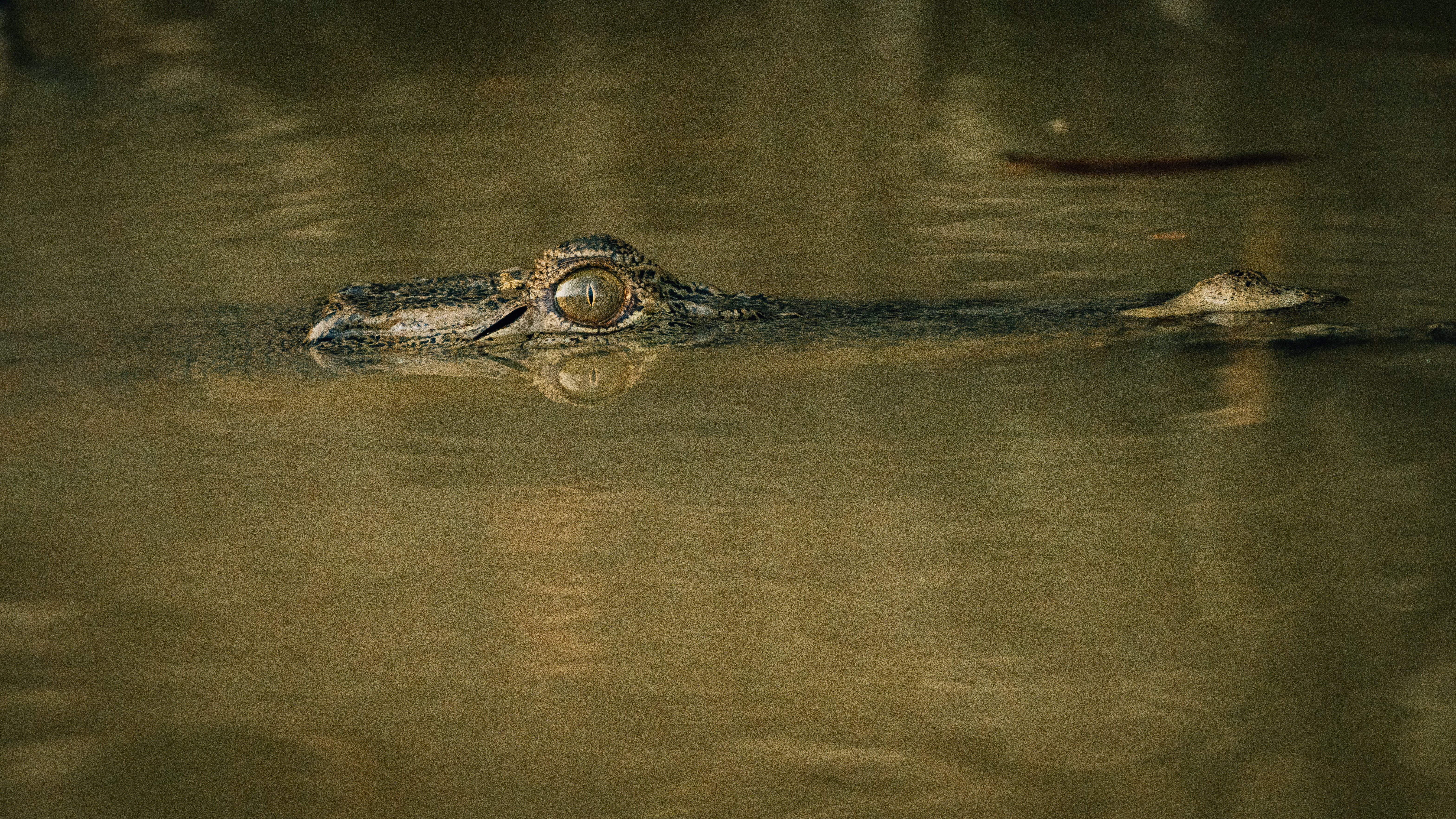
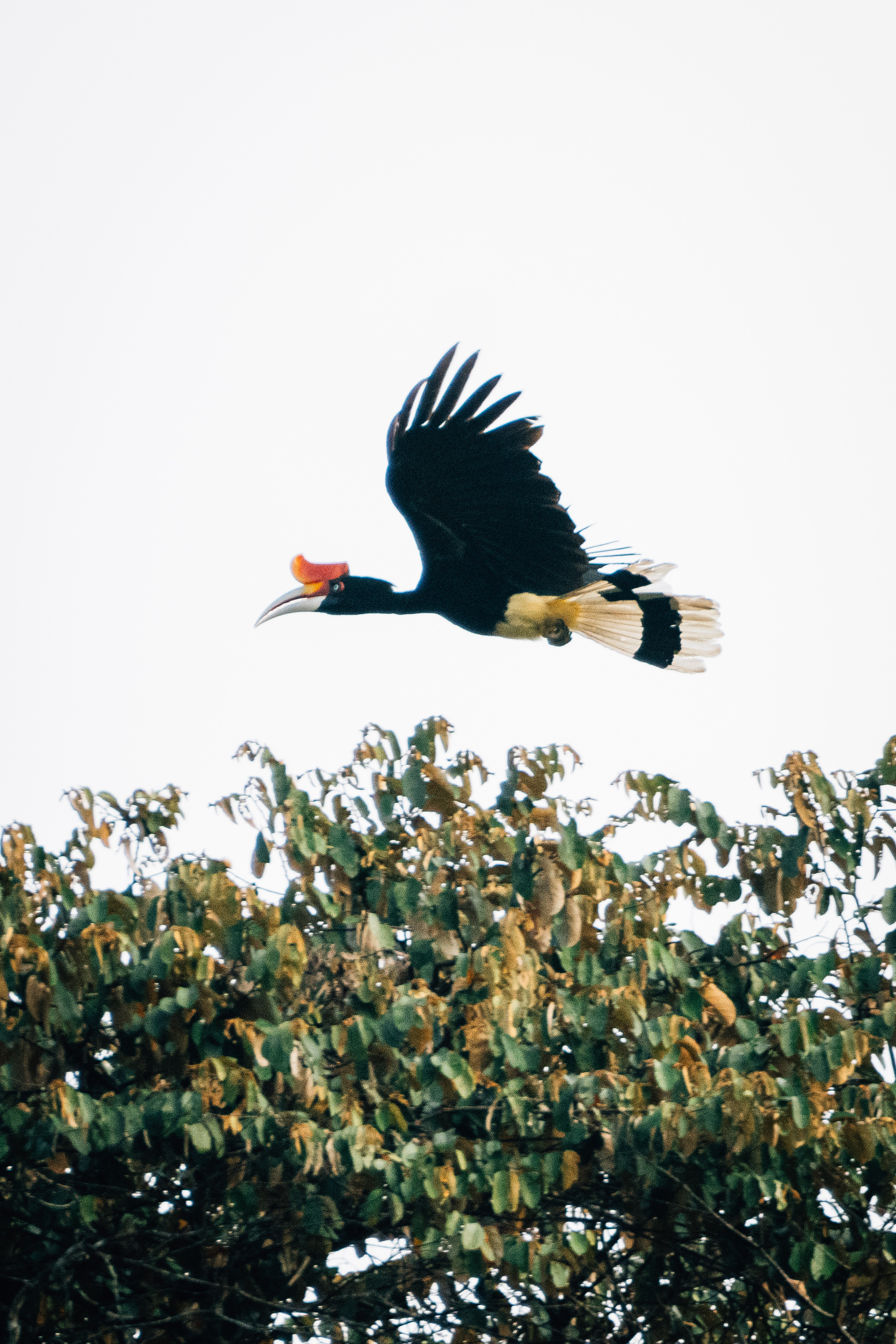
Over two days on the water we searched for what people here call the Borneo Five: the orangutan, the pygmy elephant, the proboscis monkey, the rhinoceros hornbill, the saltwater crocodile. We found glimpses of all of them, the hornbills crossing overhead, the elephants in the undergrowth, the crocodiles motionless in the shallows.
The orangutan showed up in a more unexpected way. After a dawn trip that had yielded almost nothing, we were back at camp, regrouping over a drink, when someone shouted from across the clearing. We ran, no time for cameras, and made it to the far edge of the camp just in time to see a mother and baby moving through the canopy, swinging away through the trees. They were gone in under a minute.
I’m writing this on the coach out of the Kinabatangan. Air-conditioned, forty-odd seats, navigating roads smooth enough for exactly this kind of vehicle. Outside, the oil palm goes on for miles in every direction. It has been going on for miles since we left.
Before arriving here I’d expected the rainforest to feel untamed, wild, even hostile. I’m leaving feeling that human’s have shaped, hemmed-in and pruned this place to the point that I’m not sure it feels very wild at all anymore.
The Kinabatangan river was busy, full of people who had made a serious effort to be there, long-haul flights, connecting legs, minibus transfers. Were they here to help? Or were they here because they’d quietly worked out that this might be one of the last opportunities to see these animals anywhere in the world? Most didn’t seem bothered about the distinction.