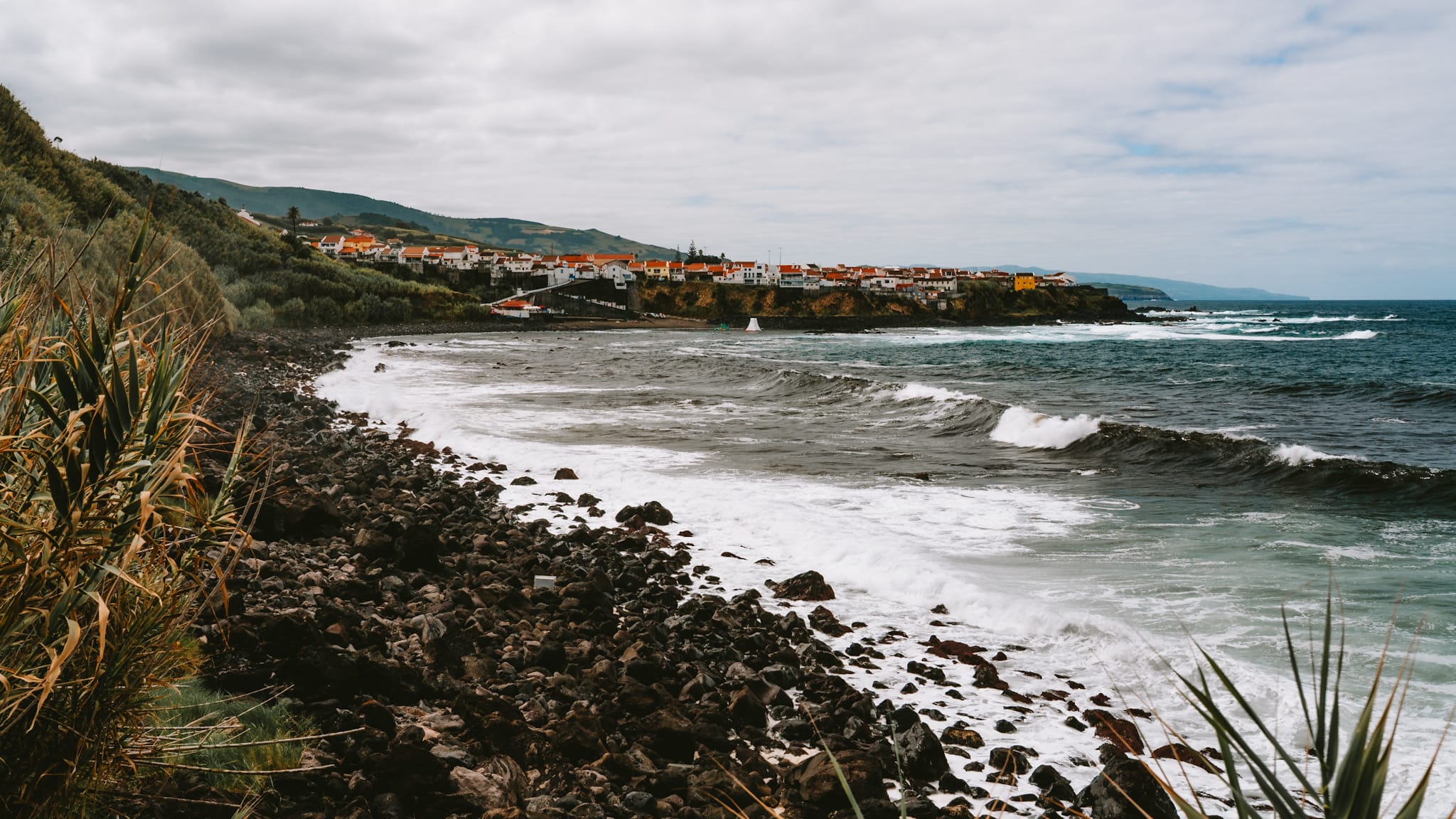
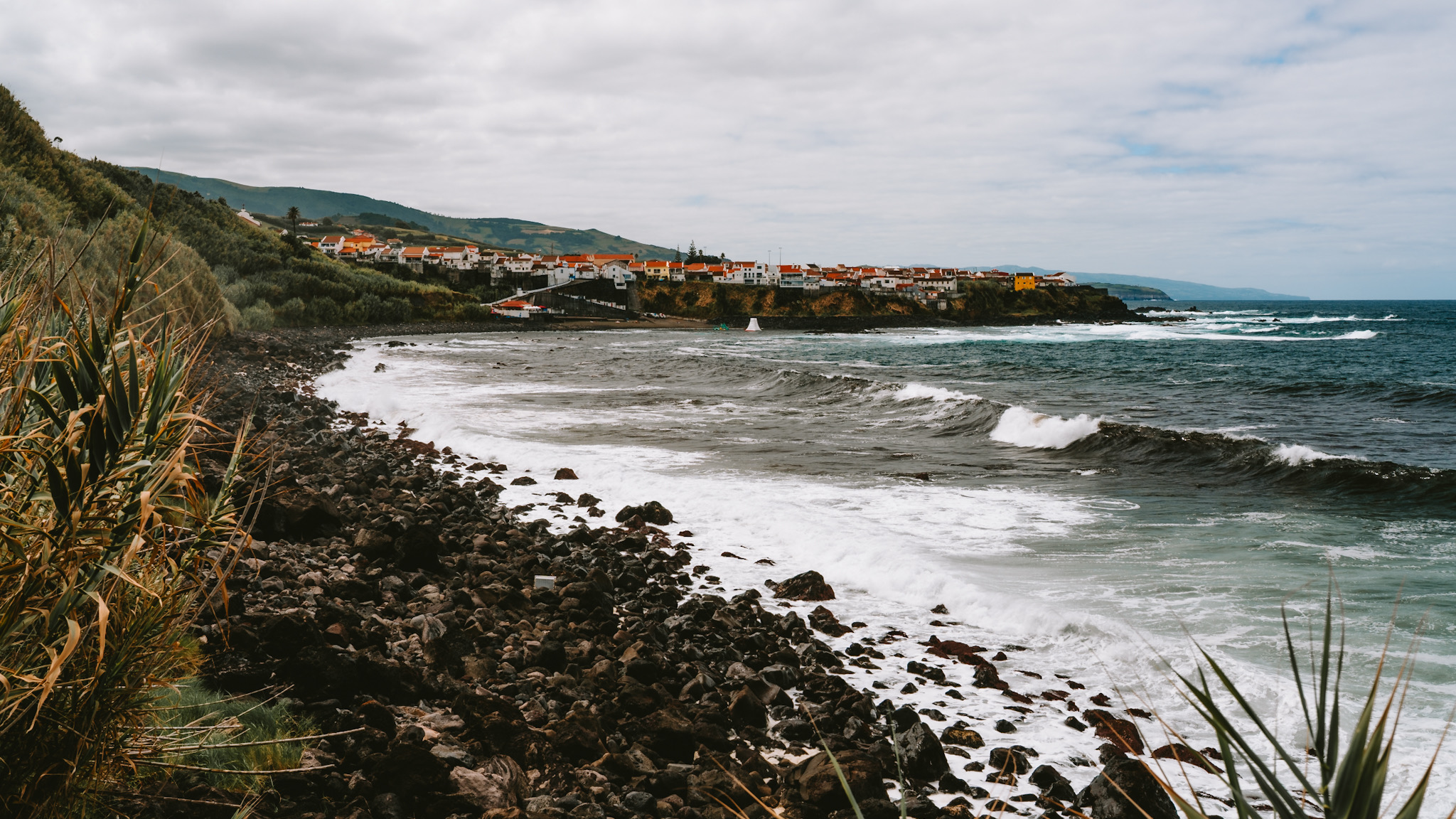
Lomba da Maia & Praia da Viola
Sunday morning driving through Lomba da Maia was marked by stillness and celebration. The narrow streets were unusually busy for such a quiet town, as people gathered for Festa de Nossa Senhora do Rosário, held annually on the last Sunday of August in honour of the parish’s patron saint. Colourful banners hung from balconies, church bells carried down the hill, and families filled the square in their Sunday best. It was a reminder of the role Catholicism continues to play in daily life here.
The road down to Praia da Viola was a heart-in-mouth descent, placing the rental car deposit in jeopardy once again on the track carved precariously in to the hillside. A steep, twisting strip of dirt and tarmac hemmed in by cliffs and fields pulled us closer to the ocean at every turn. I'm pleased to report our Nissan Juke made it in and out of Praia da Viola unscathed.
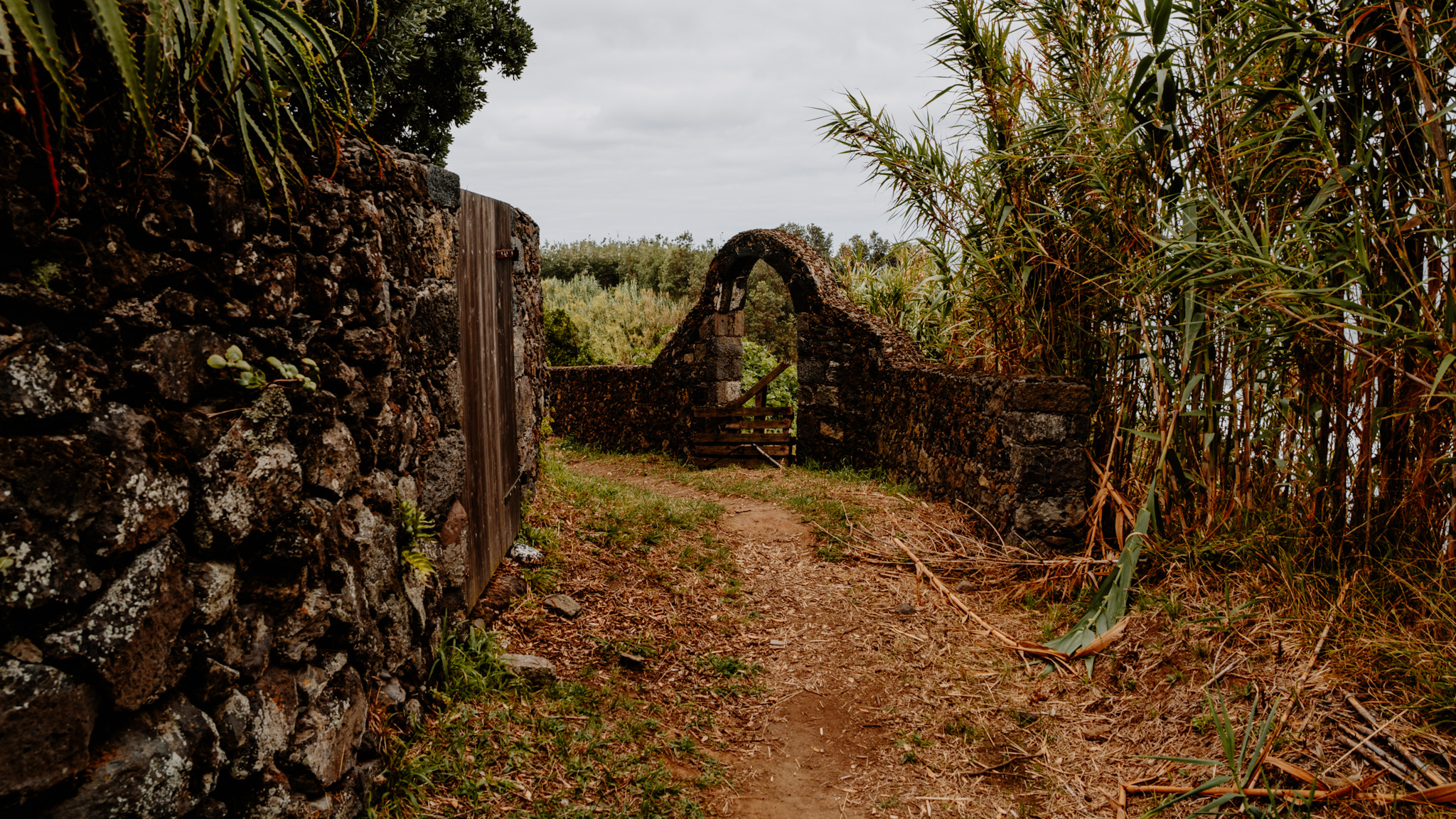
Our walk took us along the north coast on a path hemmed in by dry-stone walls built from volcanic rock, their dark edges softened by moss and flowers. The trail passed through fields and into shaded valleys, where the remains of old watermills (moinhos de água) sat by the streams. We carried on to Maia, stopping for a drink in the village before looping back along the coastal path to Praia da Viola. The Atlantic was a constant presence at our side, waves booming against the cliffs below, the coastline stretching away into haze.
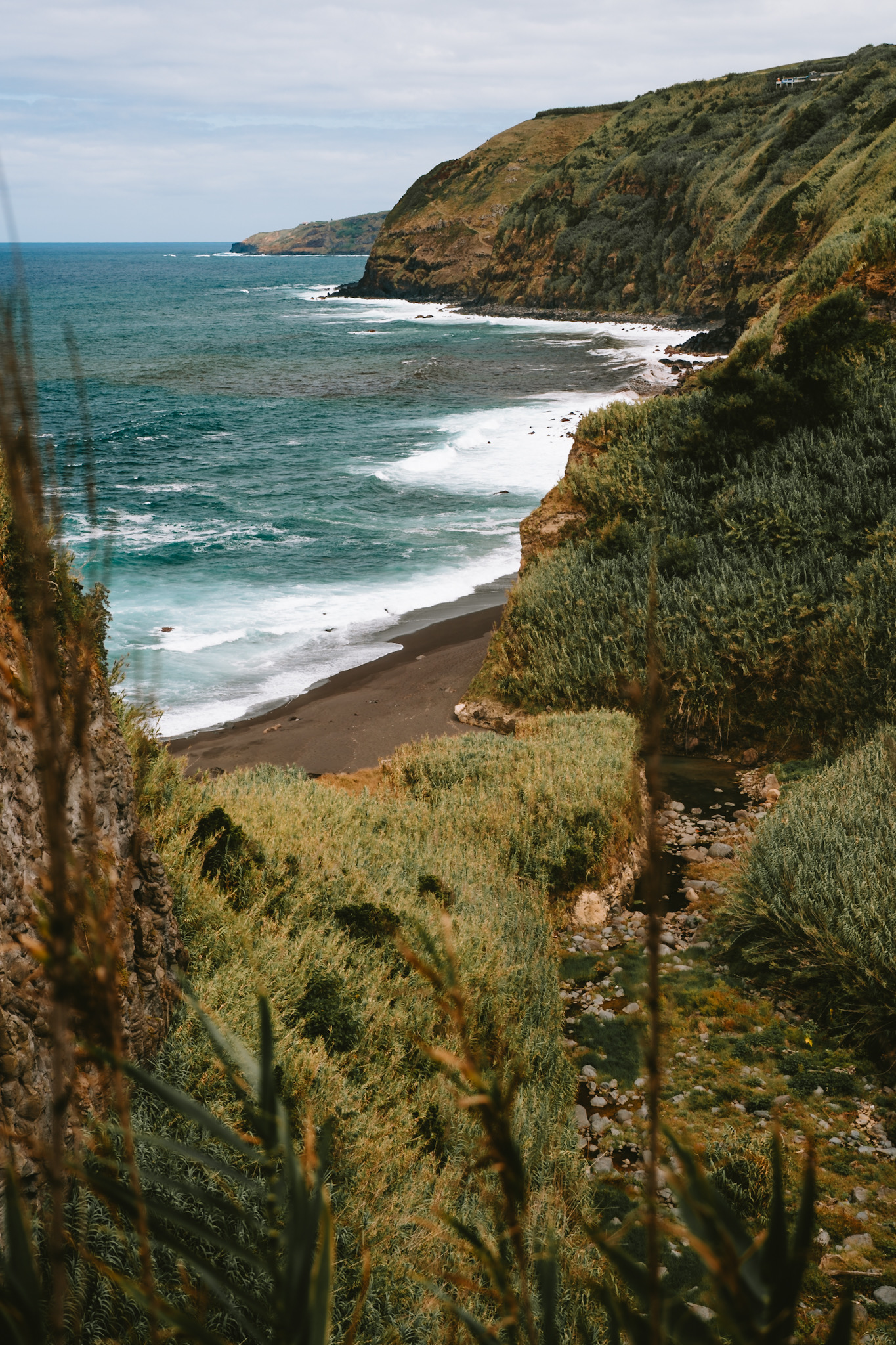
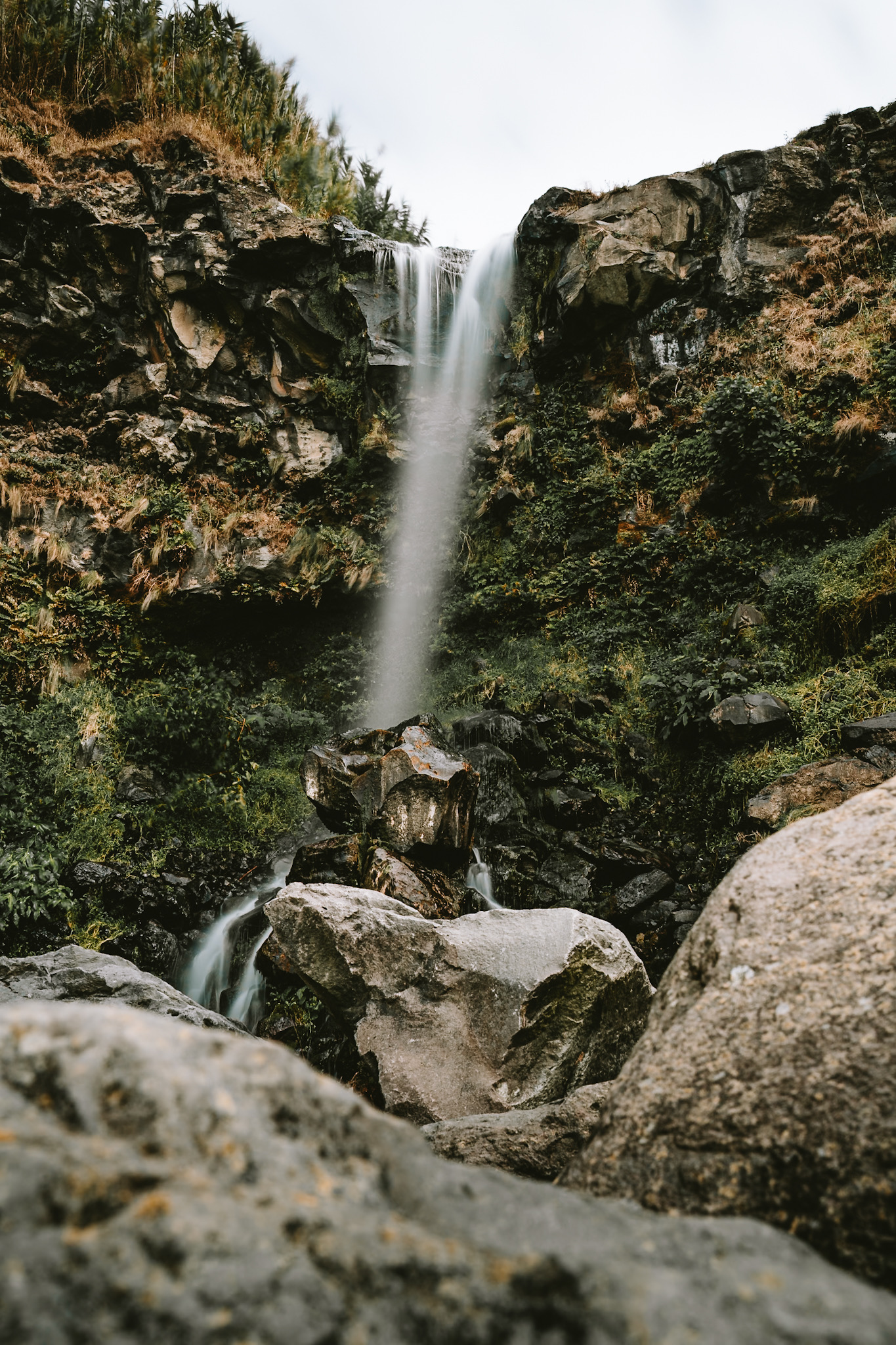
The linear walk took us back to Praia da Viola itself, a small volcanic-sand beach cradled between cliffs, with waterfalls tumbling directly onto the shore. We swam in the cool freshwater where the waterfall spilled over the rocks before mixing with the sea.
Farol do Arnel
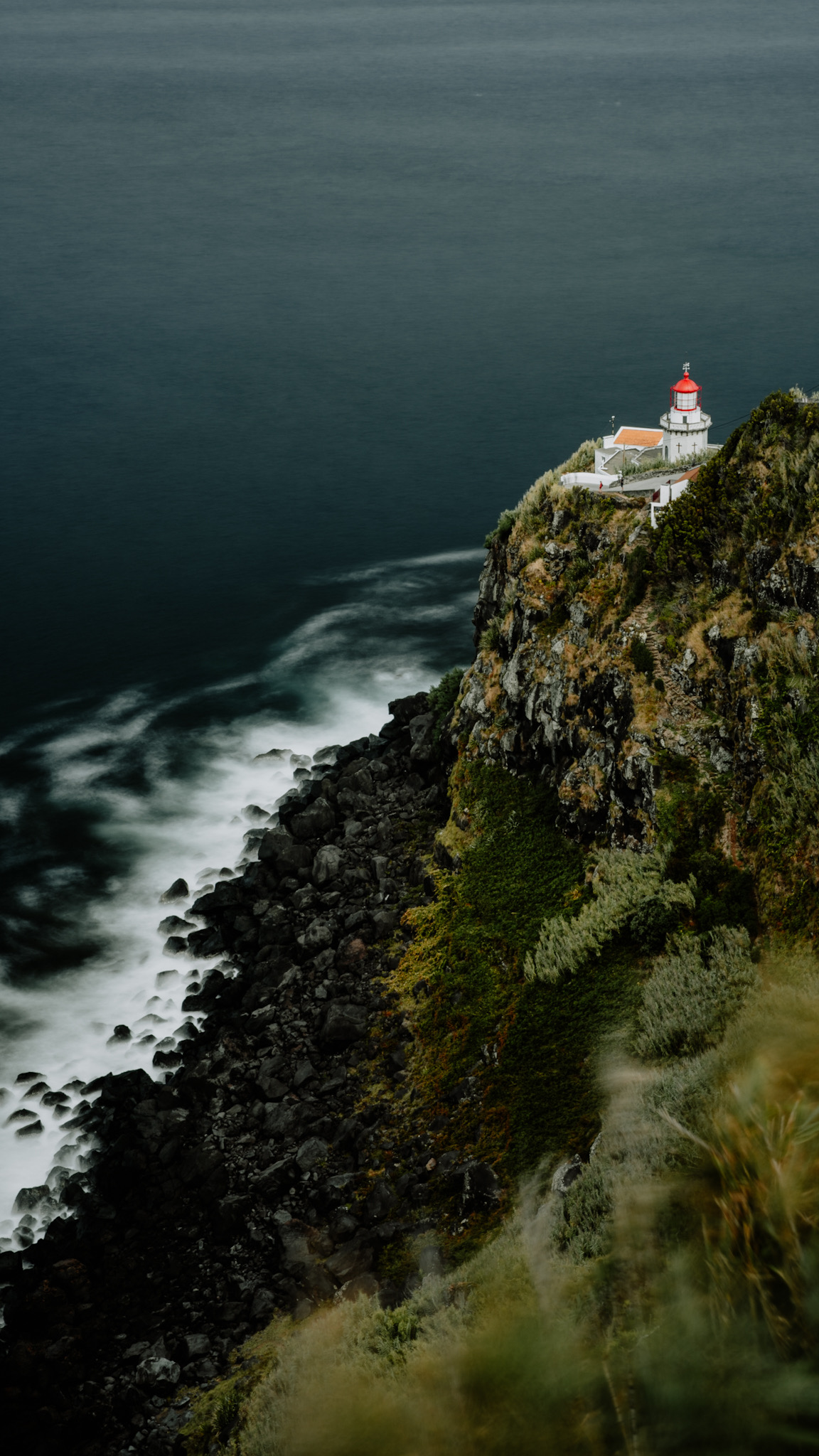
We finished our time in the north east of Sao Miguel by visiting the viewpoint just on the outskirts of the town and looking out at Farol do Arnel. Built in 1876, it is the oldest lighthouse in the Azores, perched dramatically on the cliffs of Nordeste where the land seems to fall straight into the Atlantic.