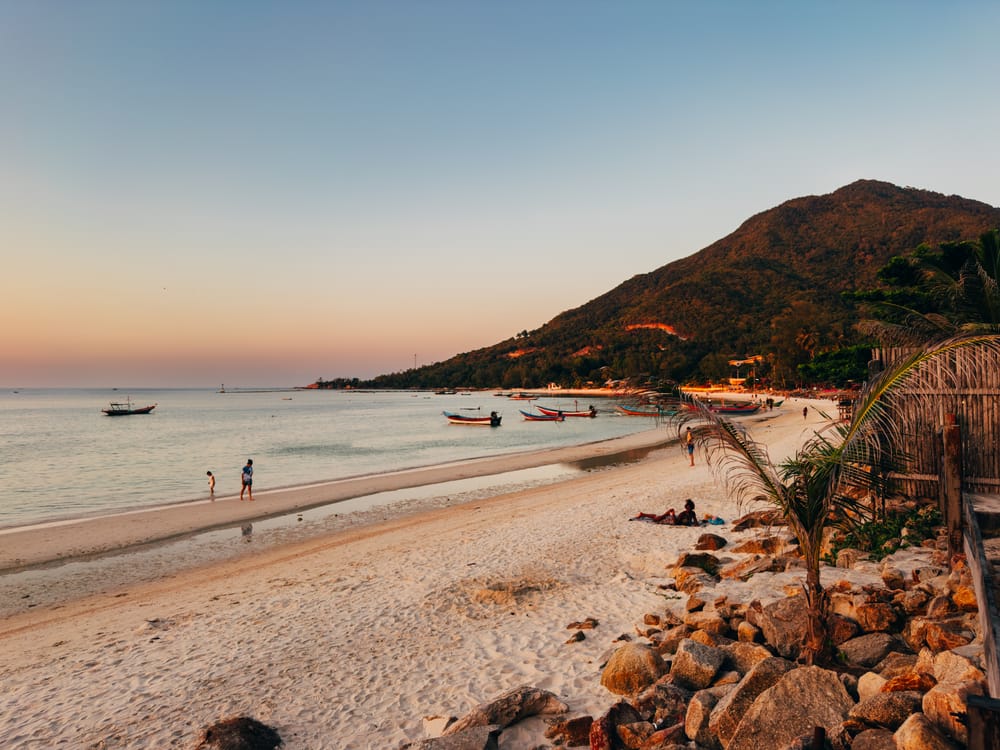
Nilaveli receded in the wing mirror before the sun had fully committed to the day. The drive inland to Sigiriya takes you through a different Sri Lanka - drier, flatter, the vegetation thinning as the coast’s humidity gives way to something more austere. The Cultural Triangle, as it’s marketed, though the history here predates the concept of marketing by roughly fifteen centuries.
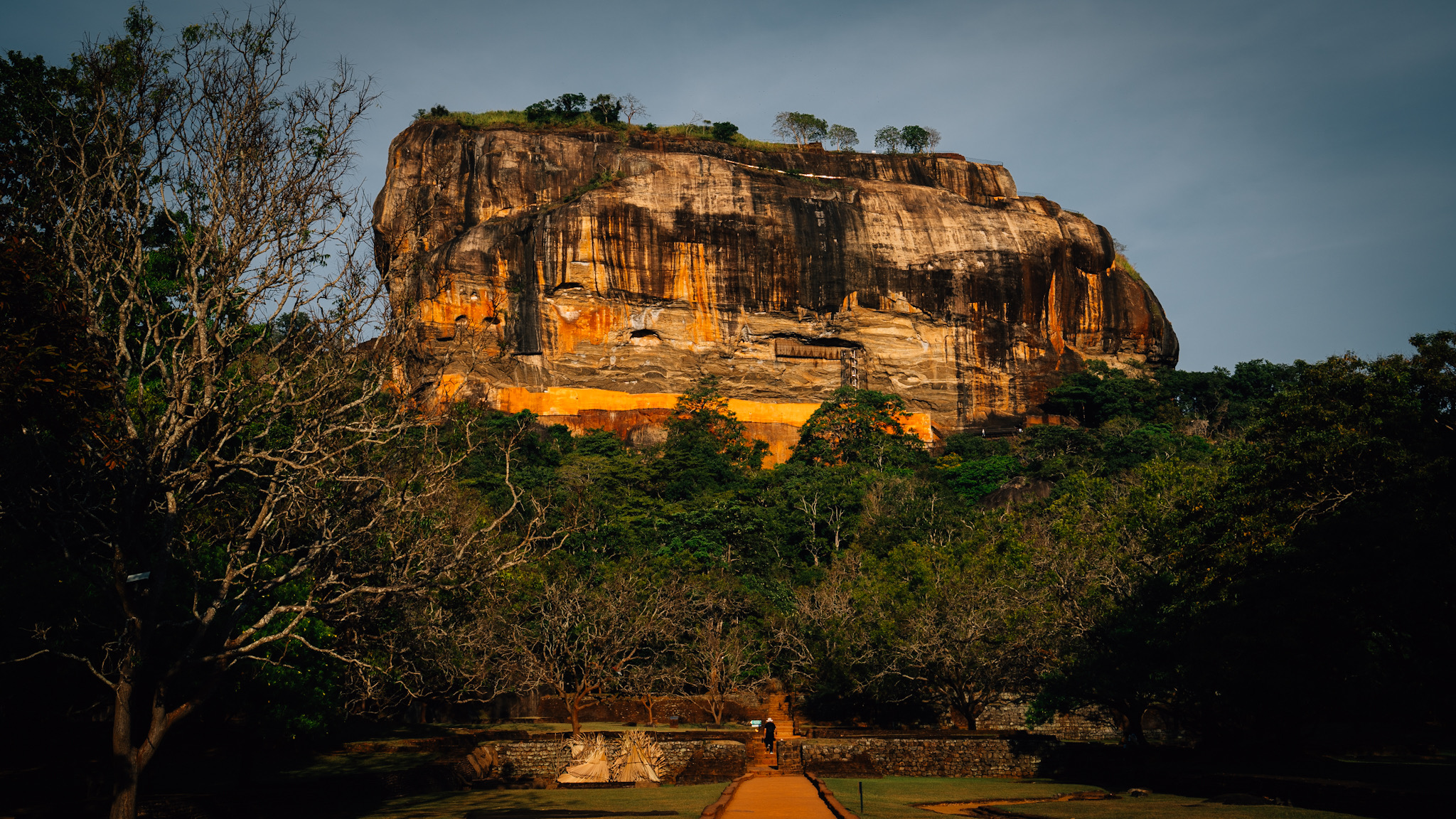
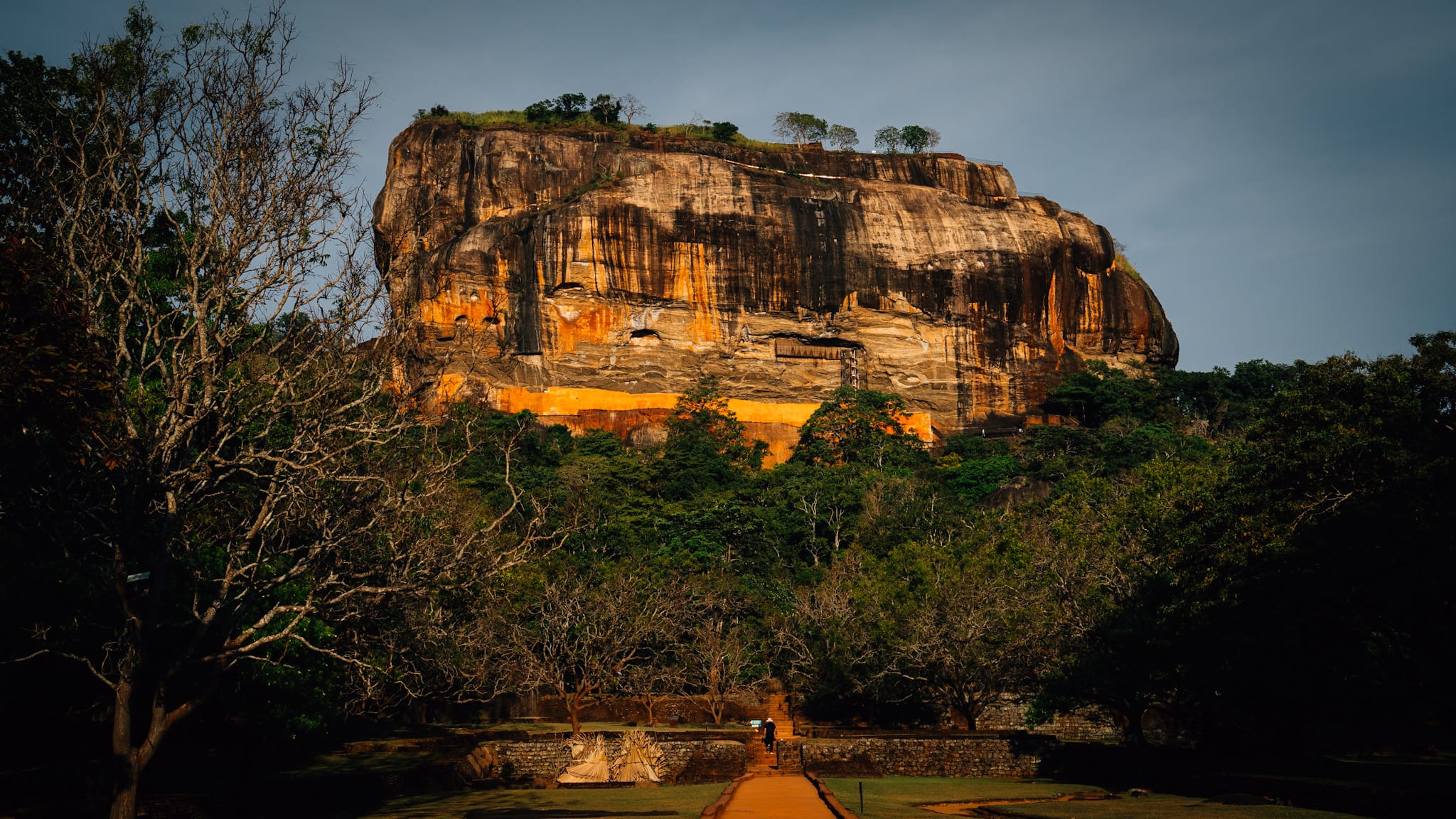
Sigiriya’s credentials are not modest. A fifth-century fortress-palace built atop a volcanic plug rising 200 metres from the surrounding plain, it was conceived by Kashyapa I, a king who murdered his father to take the throne and spent the rest of his reign building something that would be difficult to attack and impossible to ignore. The gardens at its base are among the oldest landscaped gardens in the world. The frescoes cut into the rock face midway up have survived fifteen centuries of weather and politics. After Kashyapa’s defeat and suicide, the site became a Buddhist monastery and then, gradually, a ruin, rediscovered by the British in the nineteenth century and now considered one of the best-preserved examples of ancient urban planning in Asia. It is the country’s most visited monument and considered by many to be its defining image. Standing at the base looking up, it is not difficult to understand why.
Before we had found our room, we were told about the elephants. Wild herds move through the area freely, our host explained somewhere between a boast and a warning. It was only afterwards that we learned a tourist had been killed by one the previous month.
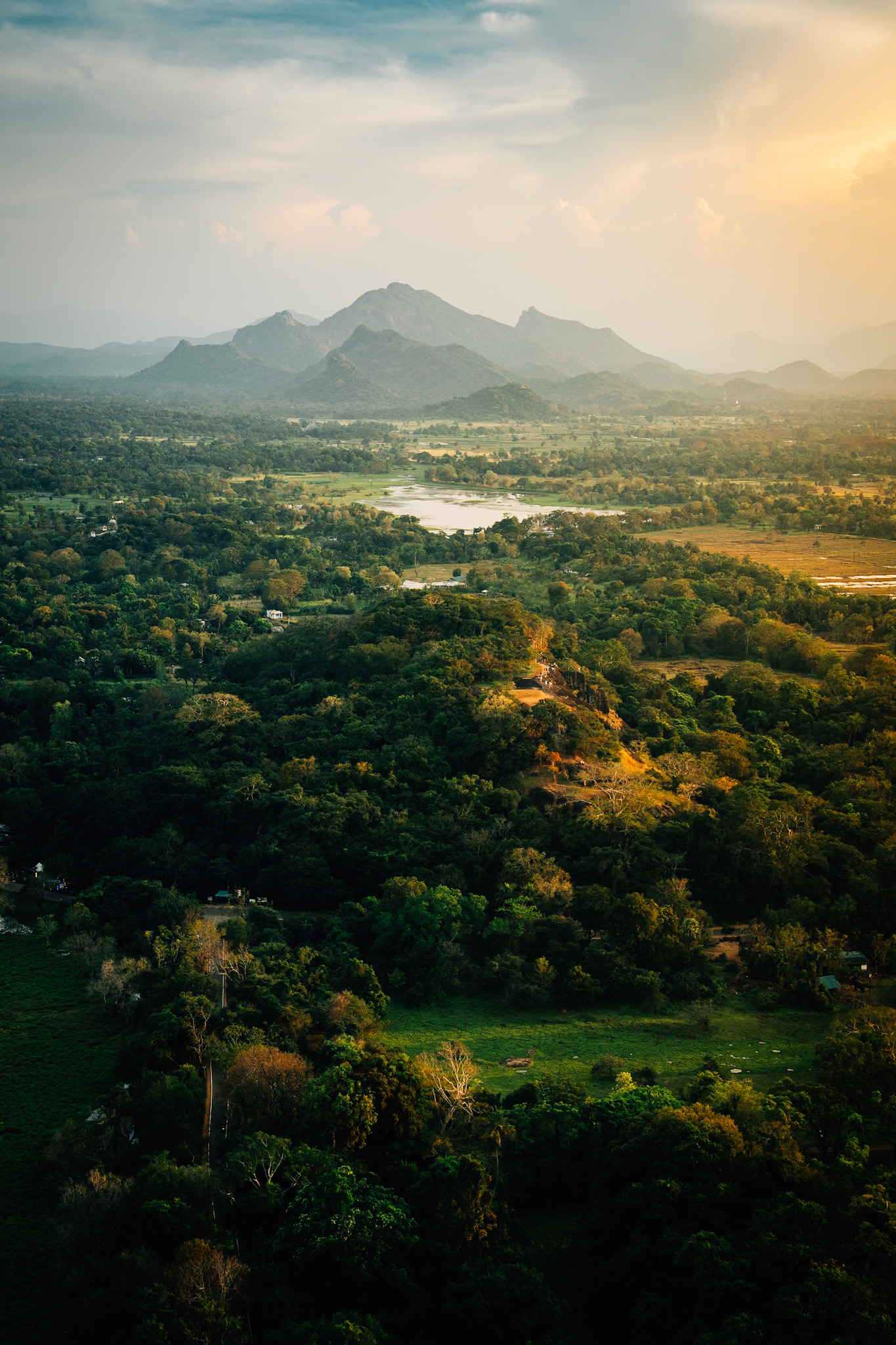
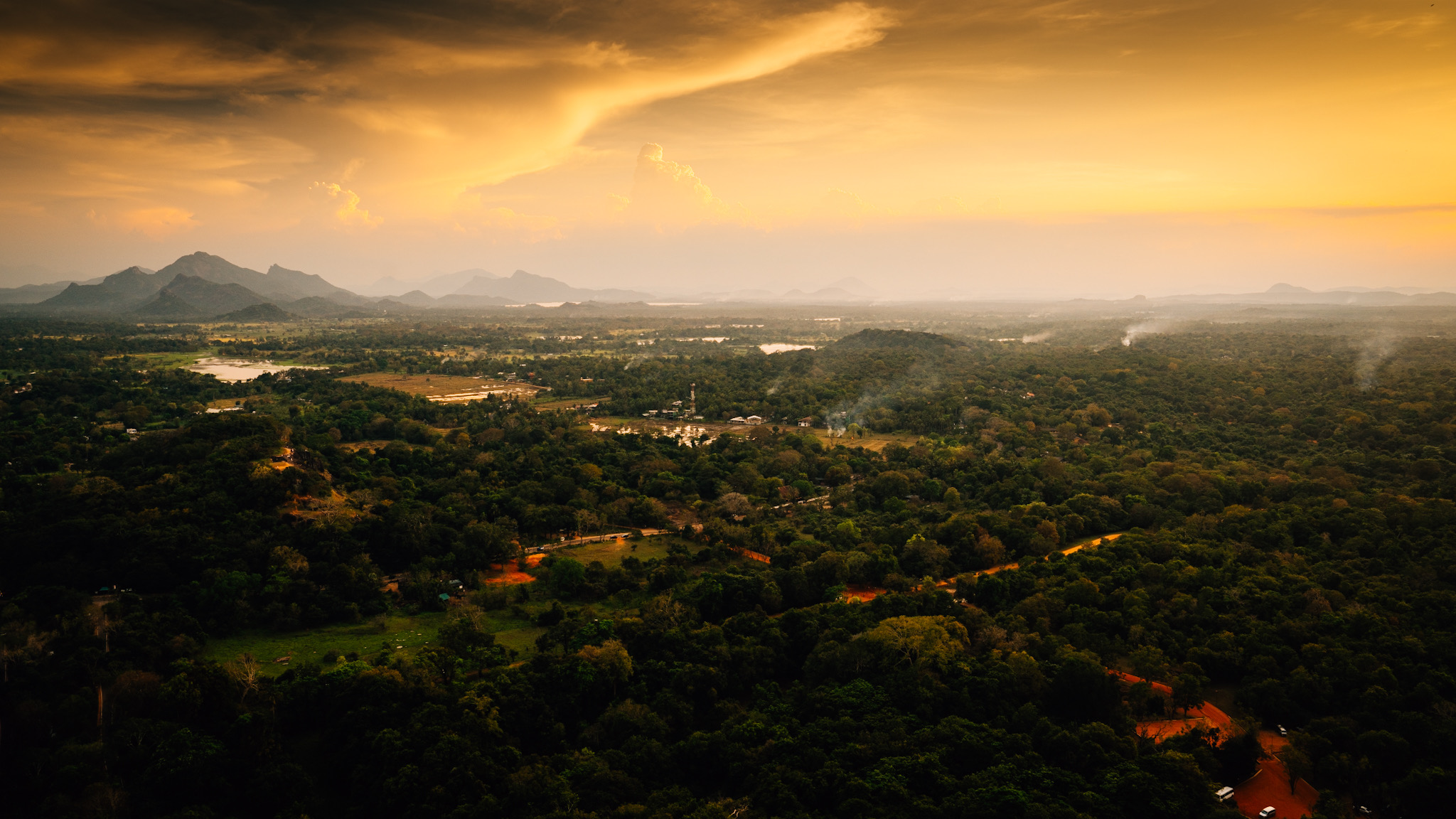
We climbed Lion Rock late in the afternoon, racing the sun at a pace that made sense in theory and rather less sense in the heat. More than 1,200 steps, the upper sections exposed to whatever the sky had to offer. We arrived at the summit much earlier than expected (35mins vs a suggested 1.5hrs) and much sweatier than planned. We had more than enough time to shoot a few frames before we lost the light. Mountains and vast jungle floated in the haze.
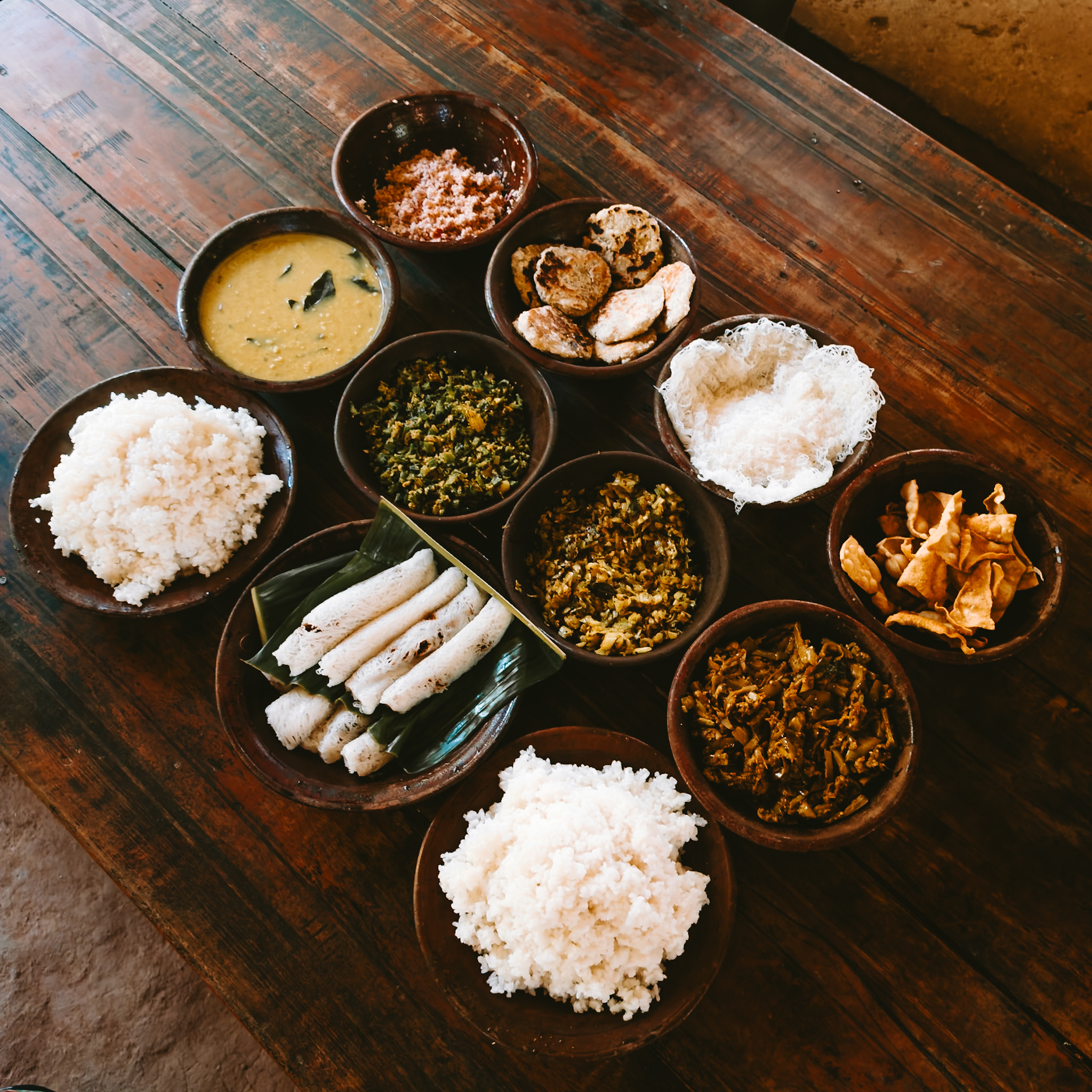
The following day was a cooking class on an organic farm where the ingredients were grown sans “poison” (the words of our teacher). Sri Lankan cooking, it turns out, is less about individual dishes and more about balance; heat offset by cool, bitter cut with coconut, each element calibrated against the others.
Sigiriya sits inside a broader cultural landscape that takes some time to understand. Offerings outside doorways, monks moving through the market at dawn, the smell of incense from shrines tucked between guesthouses, the ritual is not performed for visitors, it simply continues. ‘Ayurveda’ runs through it with the same depth. A three-thousand-year-old system built around the relationship between the natural world and the body, it is practised here with genuine seriousness rather than repackaged as spa treatment. Much of it is easy to respect. The claims about it curing cancer were not.
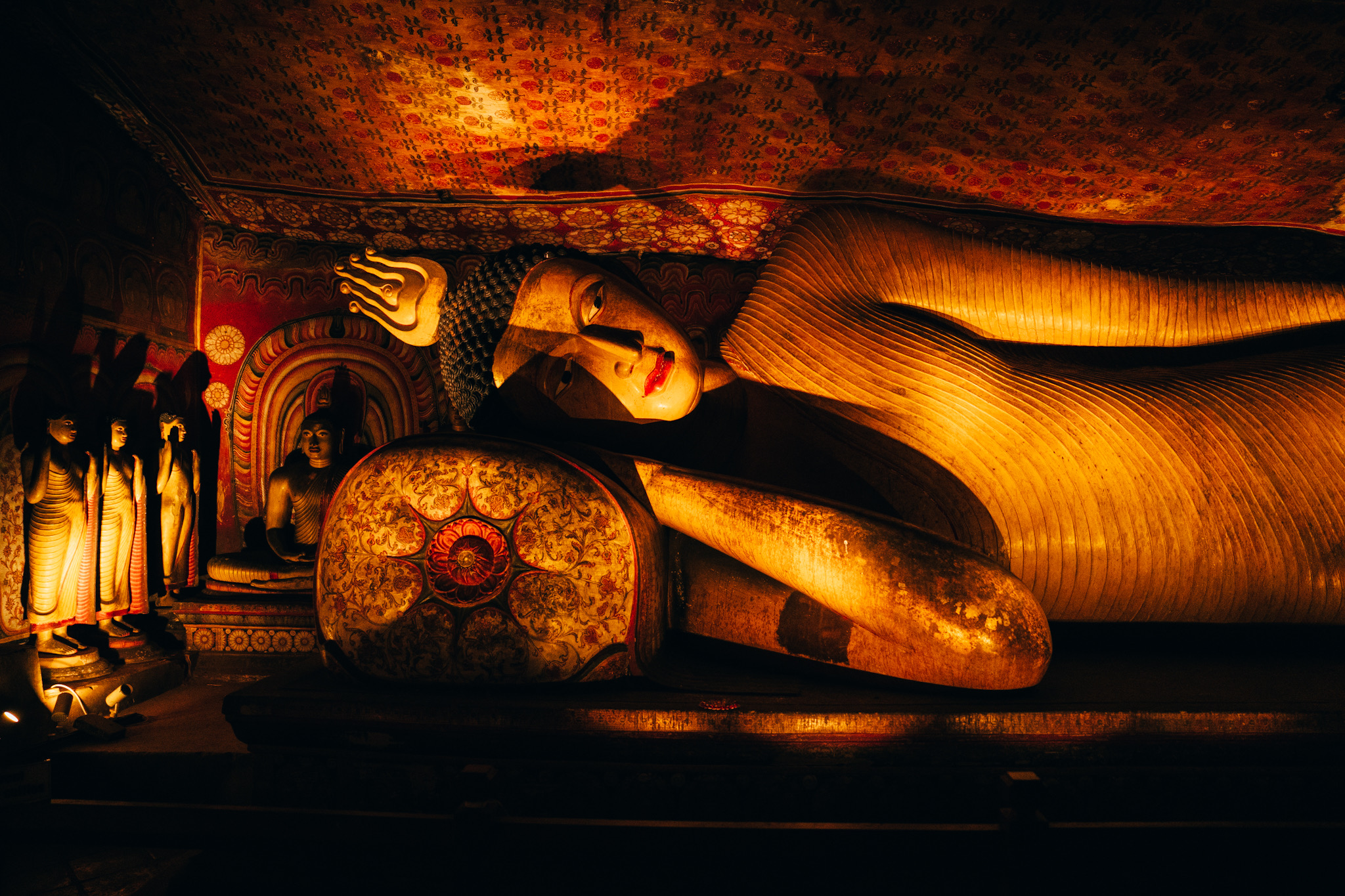
We drove to Dambulla the next day, five cave temples cut into a granite outcrop, 150 Buddha statues, ceilings and walls painted without interruption across 2,100 square metres. Pilgrims moved through barefoot, unhurried, doing what they had presumably always come here to do. The tourists moved through too, phones raised, doing the same.